
Sale and Leaseback: How to Unlock Cash From Equipment You Already Own
Is your business sitting on valuable equipment that it owns outright? Forklifts, machinery, vehicles and IT systems can represent a significant amount of capital, but that capital may be tied up in assets already doing their job.
Sale and leaseback can help you unlock cash from those assets without removing them from your premises or interrupting your operations. The equipment continues working exactly as before, while your business receives a cash lump sum and repays the finance through agreed monthly rentals.
This guide explains how sale and leaseback works, how it differs from conventional asset finance, and the points you should consider before proceeding.
What is sale and leaseback?
What if you could release cash from equipment your business already owns, while continuing to use it every day?
A sale and leaseback arrangement involves five straightforward steps:
- Your business sells equipment it owns outright to a finance provider.
- The finance provider pays your business an agreed amount for the asset.
- You lease the same equipment back under a finance agreement.
- Your business continues using the equipment at its existing premises.
- You make fixed monthly rental payments over the agreed term.
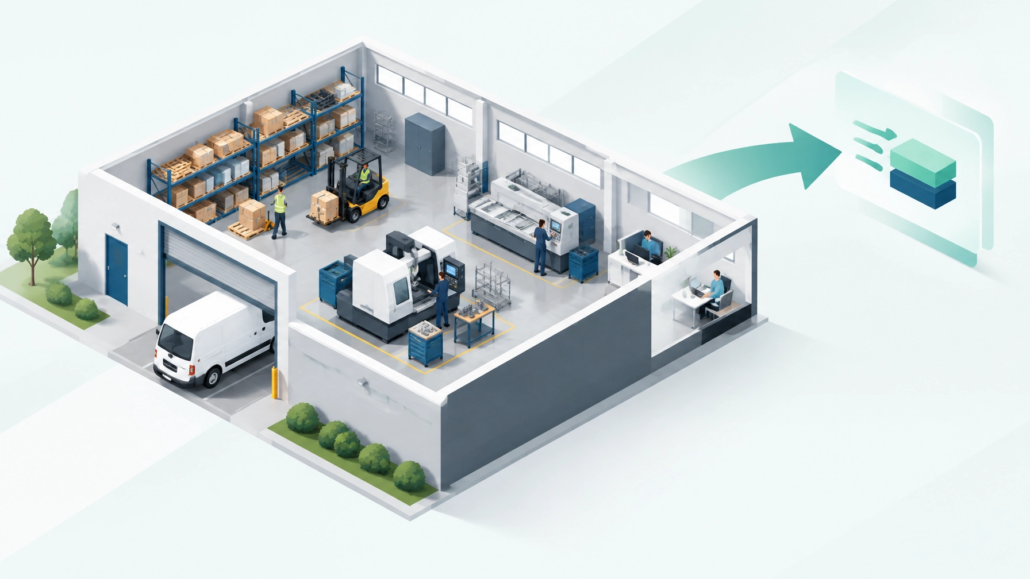
The asset does not physically leave your business. A forklift remains in the warehouse, a CNC machine remains on the production line and a commercial vehicle remains available to your team.
The key change is legal ownership. The finance provider owns the asset during the leaseback, while your business retains possession and operational use.
HMRC describes sale and leaseback as involving two separate legs: the sale of the asset and the leaseback. The disposal treatment should not be overlooked simply because the equipment remains on site. You can read the relevant HMRC Business Leasing Manual guidance.

Sale and leaseback versus conventional asset finance
Are you looking to fund a new purchase, or release value from equipment you already own?
That distinction is central.
Conventional asset finance is normally used when you want to acquire new equipment. A finance provider pays the supplier, and your business repays the cost through a lease, hire purchase agreement or another asset finance structure.
Sale and leaseback, sometimes called asset refinance or equipment refinance, is different. It is used to raise finance against equipment your business has already bought and owns.
| Conventional asset finance | Sale and leaseback |
|---|---|
| Funds the purchase of new equipment | Releases cash from existing equipment |
| The finance provider usually pays the supplier | The finance provider pays your business |
| Useful for expansion or replacement projects | Useful for working capital and cash flow management |
| Ownership depends on the finance structure | Legal title passes to the finance provider during the leaseback |
This can make asset refinance particularly useful when your business has valuable equipment on its balance sheet but needs cash for another purpose.
Sale and HP back: an alternative if you want to own the asset again
Would your business prefer to release cash now, but own the equipment again at the end of the agreement?
Sale and HP back follows the same overall idea and process as sale and leaseback. Your business sells an asset it already owns, receives a cash injection and then continues using the equipment while repaying the finance over an agreed term.
The key difference is that the asset is funded under a hire purchase agreement rather than a lease, so at the end of the term your business owns the equipment again.
This structure is often considered where the equipment has a good resale value, but the same core principle still applies: it is a way of releasing cash from an owned asset without taking it out of use.
Why might a business use asset refinance?
Why sell an asset that is already paid for? In many cases, the answer is to make better use of capital that is currently tied up in equipment.
Businesses may consider sale and leaseback to:
Release working capital
Fully paid-for or fully depreciated equipment can continue to have significant operational and resale value. Sale and leaseback can convert some of that value into cash for day-to-day business needs.
Fund growth
The released cash could support recruitment, stock purchases, marketing, a new location, additional vehicles or other growth plans.
Support an acquisition
If you are considering an acquisition, asset refinance may provide part of the funding required without immediately applying for a new bank facility.
Refinance more expensive borrowing
Where your business has existing borrowing with a high cost, releasing capital from suitable assets may help restructure some of your financial commitments. Any proposed refinancing should be reviewed carefully, including early settlement costs and the total cost of the new agreement.
Protect your cash buffer
Keeping a cash reserve can help your business respond to unexpected repairs, slower customer payments or changes in demand. Sale and leaseback may allow you to strengthen that buffer without selling the equipment or stopping its use.
Avoid relying solely on unsecured borrowing
Because the arrangement is linked to an asset, it may provide an alternative to taking out a new unsecured facility. However, it remains a form of borrowing and creates a contractual repayment obligation.
The best solution depends on your objectives, the asset’s value and condition, and your business’s ability to meet the rentals.
Which assets are suitable for sale and leaseback?
Does your equipment have a long working life and a recognised resale value?
Sale and leaseback is generally more suitable for assets that remain useful over several years and can be valued with reasonable confidence. Examples may include:
- Commercial vehicles
- Forklifts and warehouse equipment
- Plant and machinery
- CNC machines
- Production equipment
- Manufacturing machinery
- Warehouse racking
- IT hardware held at scale
- Specialist business equipment

The asset’s age, condition, maintenance history, market value and remaining useful life can all affect the amount available, the term and the pricing.
Not every item will be suitable. Low-value assets, heavily depreciated equipment, assets with limited resale markets or equipment subject to another lender’s ownership rights may be more difficult to refinance.
Can you do a sale and leaseback on equipment that is already on finance?
Is an existing finance agreement already attached to the asset?
In short, no — you cannot refinance an asset that is already subject to another finance agreement, because that would mean two lenders lending against the same asset, which is not permitted.
The existing agreement would first need to be settled in full so that your business has clear legal title to the equipment before a sale and leaseback could be considered. With vehicles, the HPI register should also be checked to confirm that no finance is recorded against the vehicle.
That said, this does not necessarily mean the option is closed off. If your business wants to explore what is involved in settling an existing agreement first, WestWon can talk you through the process and the practical points to consider.
What are the disadvantages and risks?
Could releasing cash today create pressure later?
Sale and leaseback should be considered as a strategic finance decision, not as free capital. Important points include:
It is borrowing
You receive a cash lump sum, but you must repay the finance through fixed monthly rentals.
You give up legal ownership
The finance provider owns the equipment during the leaseback. Your business retains use of the asset, but it no longer owns it outright.
The total cost will usually exceed the cash released
Interest, fees and other charges may apply. Over the full term, the total rentals are normally greater than the initial cash proceeds.
The asset may be at risk if payments are not maintained
As with other secured asset finance arrangements, missed payments can have serious consequences. You should understand the agreement fully before signing.
There may be tax and accounting consequences
Selling the equipment is a disposal for tax purposes, and the leaseback must be accounted for correctly. Your accountant should review the proposal before you proceed.
There is no universally right or wrong answer. The important question is whether the arrangement is a suitable fit for your budget, cash flow and longer-term plans.
Tax and accounting treatment: what should you know?
How could sale and leaseback affect your tax position?
This section is a general summary, not tax or accounting advice. The treatment depends on the asset, the transaction structure, your accounts and the type of lease involved.
Because legal title passes to the finance provider, your business generally cannot continue claiming capital allowances simply on the basis that it previously owned the equipment. However, the detailed rules depend on the lease classification. Under long funding lease rules, capital allowances may in some circumstances fall to the lessee, while in other arrangements the lessor may be able to claim them.
The sale is also a disposal. You may need to bring a disposal value into your plant and machinery pool, which could result in a balancing charge or balancing allowance. A balancing charge can arise where the relevant disposal value exceeds the tax written-down value; a balancing allowance may arise where it is lower.
HMRC has specific anti-avoidance rules for sale and finance leaseback arrangements. These can restrict the disposal value or qualifying expenditure, so a sale and leaseback should not be viewed as a way to create additional capital allowances automatically.
Lease rentals are generally considered as part of the tax treatment of the lease, but deductions can be subject to the specific rules and structure involved. HMRC’s Capital Allowances Manual guidance explains some of the restrictions that can apply.
For accounting purposes, the arrangement will usually need to be reflected on the balance sheet under the applicable FRS 102 requirements, including the relevant asset and lease liability treatment.
Always speak to your accountant or tax adviser before entering into a sale and leaseback transaction. They can assess the disposal, capital allowances, VAT, corporation tax and accounting treatment for your specific circumstances.
How WestWon can help with equipment refinance
Would you prefer to deal with one experienced finance broker rather than approach lenders individually?
At WestWon, we arrange asset finance, equipment refinance and sale-and-leaseback solutions through our relationships with multiple funders. We are an FCA-regulated credit broker, not a lender, which means we can review your requirements and identify potentially suitable funding options from our network.
We work with a wide range of assets, including:
- Forklifts
- Plant and machinery
- Commercial vehicles
- Warehouse racking
- Production equipment
- IT equipment
- CCTV and security systems
- Office equipment and fit-outs
Deal sizes can start from around £778 plus VAT, with larger transactions of £1 million and beyond considered depending on the asset, business and lender appetite.
Our team can help you understand:
- Whether sale and leaseback or another refinance structure may be appropriate.
- What information is needed to assess the asset.
- How much funding may be available.
- How the proposed monthly rentals could affect your cash flow.
- What alternative asset finance options may be worth considering.

Availability, terms and pricing depend on the asset’s age and condition, its value, your business’s circumstances and the lender’s assessment. We cannot guarantee acceptance or any particular rate.
You can learn more about refinancing equipment and business assets or read about WestWon’s sale and leaseback solutions.
Sale and leaseback FAQs
What is sale and leaseback?
Sale and leaseback is a finance arrangement where your business sells equipment it owns outright to a finance provider and leases it back. You receive a cash lump sum while continuing to use the equipment on your premises.
Is sale and leaseback the same as a sale and leaseback mortgage?
No. A sale and leaseback mortgage usually relates to commercial property, where a business sells premises and rents them back. This article covers sale and leaseback of equipment and business assets.
Can I claim capital allowances after a sale and leaseback?
Not automatically. The answer depends on the asset, lease classification and specific capital allowances rules, including long funding lease and anti-avoidance provisions, so you should obtain advice from your accountant or tax adviser.
Concluding: is sale and leaseback right for your business?
Sale and leaseback can help you unlock cash from equipment that your business already owns, while keeping that equipment in use. It may support working capital, growth, recruitment, acquisitions or refinancing plans without requiring you to remove valuable assets from your operations.
However, it also transfers legal ownership, creates fixed monthly rentals and usually costs more over the full term than the cash initially released. There is no right or wrong answer, only the structure that best fits your business’s assets, budget and future plans.
If you would like to discuss sale and leaseback, asset refinance or equipment refinance, contact our team on 01494 611 456 or email [email protected]. We can talk through your requirements and explain the options available, subject to lender assessment.
For tax-specific or accounting guidance, please speak to your accountant or qualified tax adviser before proceeding.